News
Media can help preserve local languages for future generations, says ABU Media Academy Head
Media can play a crucial role in preserving local and indigenous languages, promoting linguistic diversity and keeping them relevant among younger generations, says Asia-Pacific Broadcasting Union (ABU) Media Academy Head Nimmala Shanmuganathan.
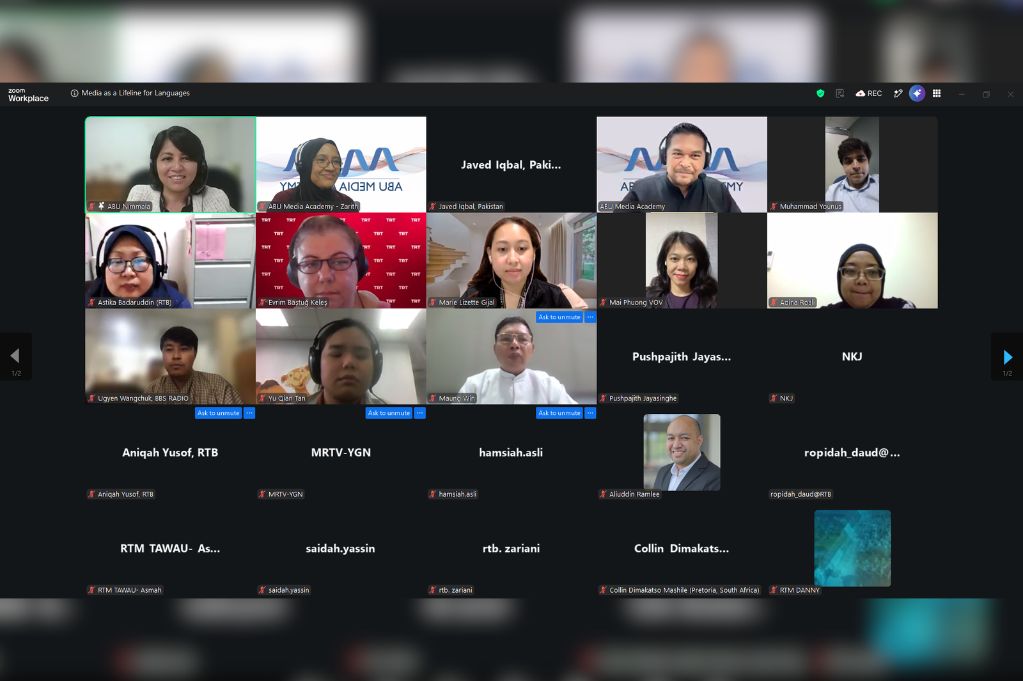
Speaking during an ABU Media Academy webinar titled Media as a Lifeline for Languages, she highlighted the growing challenge of language loss across Asia and the Pacific, where many local and native languages are becoming less widely used, particularly among younger people.
She said urbanisation, migration and the increasing dominance of major languages in education, business and everyday communication have contributed to the decline of regional languages.
According to her, up to 40 per cent of the world’s languages are at risk of disappearing, with some facing the possibility of losing their remaining speakers within the next generation.
She stressed that media has a unique opportunity to make local languages more attractive, accessible and relevant, particularly to younger audiences, through television programmes, films, music and digital content.
Drawing on her personal experience growing up in Malaysia, Nimmala explained how exposure to television programmes and films helped her become familiar with several languages, including Malay, English, Cantonese, Mandarin, Hindi and Tamil.
She said her experience demonstrated how media content can support language learning naturally, beyond conventional classroom teaching.
Nimmala also highlighted South Korea’s content industry as an example of how investment in local productions can help promote a language internationally.
The global popularity of Korean music, films and television dramas has helped introduce the Korean language to audiences worldwide, demonstrating how exporting cultural content can also increase interest in its language.
She also pointed to India’s regional-language content industry, where films and television programmes in languages such as Tamil, Telugu, Kannada and Bengali reach wider audiences through subtitling and dubbing.
These approaches have helped regional productions cross language and geographical boundaries, while allowing audiences to appreciate content in its original language.
Nimmala emphasised that broadcasters should look beyond dominant languages and create opportunities for local and indigenous languages to thrive through meaningful and engaging content.
She said media organisations can contribute to preserving linguistic diversity by making local languages part of contemporary storytelling and ensuring they remain connected to younger generations.
The webinar brought together participants from across the region to explore how media organisations can support language preservation and strengthen the role of local languages in society.
Our Latest News
Discover More News