
News
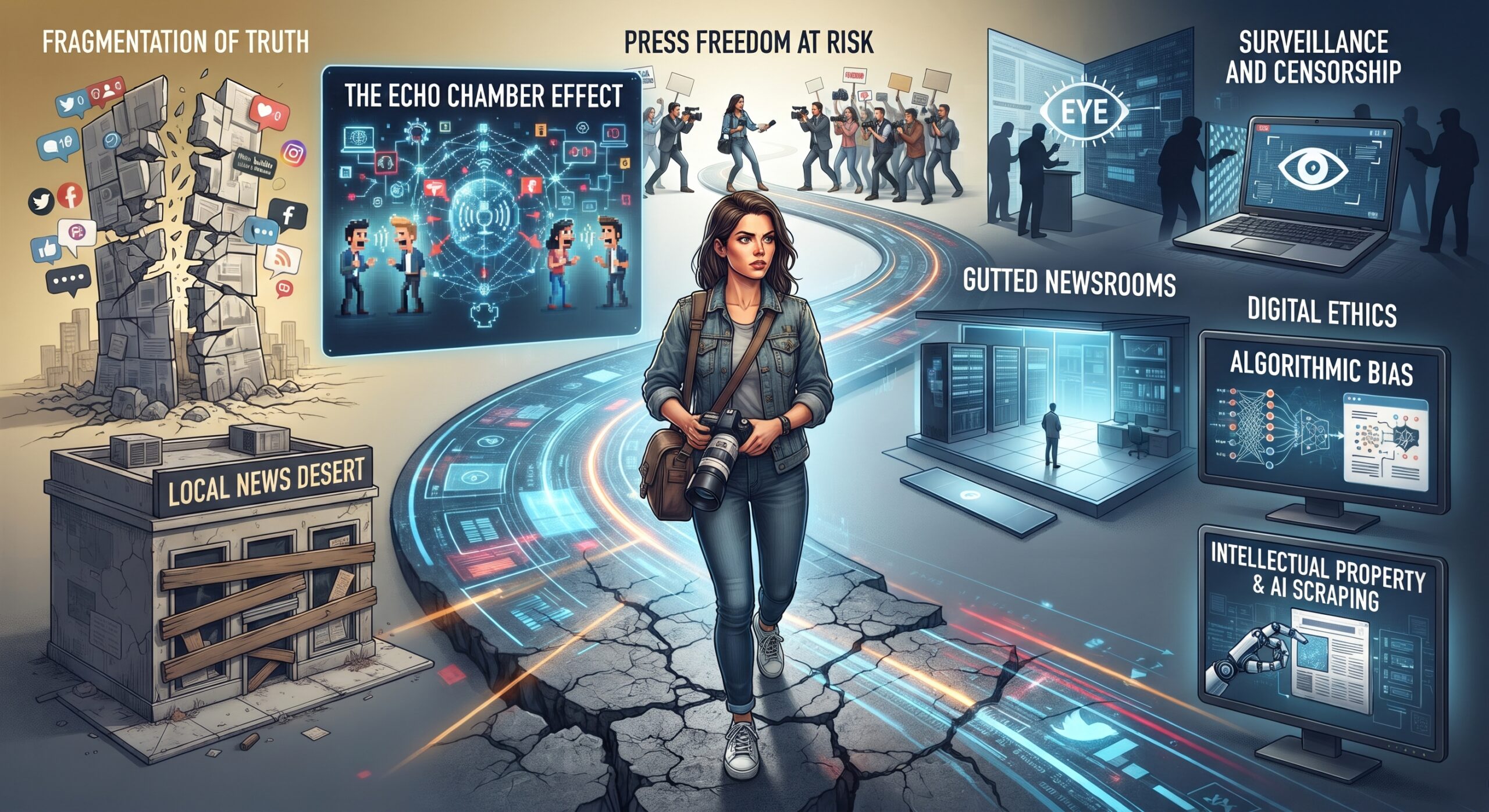
Challenges in journalism in the digital age
Journalism has long played a vital role in informing the public, promoting transparency, and holding those in power accountable. However, the rapid evolution of technology, changing audience habits, and growing economic pressures have created unprecedented challenges for journalists and news organisations worldwide. As the media landscape becomes increasingly complex, the profession must adapt while maintaining its fundamental principles of accuracy, fairness, and integrity.
One of the greatest challenges facing journalism today is the proliferation of misinformation and fake news. Social media platforms allow information to spread instantly, often without proper verification. False or misleading stories can reach millions of people before journalists could fact-check and correct them. This phenomenon undermines public trust in the media and creates confusion among audiences. Journalists are now expected not only to report the news but also to actively debunk false information circulating online.
In many countries, trust in traditional media has declined significantly. Political polarisation, accusations of media bias, and the rise of alternative information sources have led some audiences to question the credibility of journalists. To rebuild public confidence, news organisations must demonstrate transparency in their reporting processes, clearly identify sources, and uphold strong ethical standards. Accuracy and accountability have become more important than ever.
The digital revolution has transformed how people consume news. As audiences increasingly access information online for free, traditional revenue streams such as print subscriptions and advertising have declined. Many news organisations have responded by reducing staff, closing local newsrooms, or relying on subscription-based models. These financial constraints can limit investigative reporting, which often requires significant time and resources.
Social media platforms have become a primary source of news for many people. While these platforms help journalists reach wider audiences, they also create intense competition for attention.
News outlets are under pressure to publish stories quickly to remain relevant. This urgency can sometimes increase the risk of errors and reduce the time available for thorough verification and analysis. Balancing speed with accuracy remains a constant challenge.
Journalists often face threats while carrying out their work. Reporters covering conflicts, political unrest, corruption, or organized crime may encounter intimidation, harassment, physical violence, or legal pressure. In the digital era, online harassment has become increasingly common, particularly for female journalists and those reporting on controversial issues. Protecting journalists’ safety is essential for maintaining press freedom and ensuring that important stories continue to be reported.
New technologies have introduced complex ethical questions. The use of artificial intelligence manipulated images, and deepfake videos can make it difficult to distinguish authentic content from fabricated material. Journalists must exercise caution when using digital content from social media and verify information through reliable sources. Ethical decision-making remains central to preserving credibility and public trust.
Political influence, corporate interests, and advertiser pressure can threaten editorial independence. Journalists must navigate these pressures while remaining committed to objective reporting and serving the public interest. Independent journalism is critical for democratic societies, as it enables citizens to make informed decisions based on accurate and balanced information.
Journalism is facing significant challenges in an era defined by rapid technological change and information overload. From combating misinformation and financial instability to protecting journalists’ safety and maintaining public trust, the profession must continuously adapt to new realities. Despite these obstacles, the core mission of journalism remains unchanged in providing accurate, credible, and meaningful information that enables citizens to understand the world around them and participate effectively in society.
Our Latest News
Discover More News